ANHUI UNIVERSITY × STONY BROOK

DMT
Class 01

安徽大学纽约石溪学院 · 数字媒体技术 1 班。一个连接创意、技术与彼此的班级空间。从日常事务到灵感协作,我们一起把想法变成作品。

CLASS SPACE / 2026—202731° 51′ N
DMT
01
MAKE · SHARE · GROWSBIAHU / AU
班级头条 / CLASS HEADLINE

初识 ETS 明方向,逐梦寰球启新程

Meet ETS, Find Your Direction — a guide to English tests and global pathways.

LATEST ↗
IDEAS INTO REALITY DIGITAL MEDIA TECHNOLOGY ONE CLASS, MANY POSSIBILITIES IDEAS INTO REALITY DIGITAL MEDIA TECHNOLOGY ONE CLASS, MANY POSSIBILITIES
01 / CLASS AFFAIRS

班级事务中心

第 3 周 · 课程速览

WEEK 03
课表周次按北京时间自动更新 · 点开完整周课表查看
02 / WHAT'S HAPPENING

近期日程

班级活动与课程日历,一起规划每周节奏。

10.12
班级见面会 · 一起认识彼此
班级活动 · 线下
↗
10.18
秋季学科竞赛信息分享
竞赛交流 · 报名中
↗
打开周课表 →

有想法,就一起做出来。

加入班级协作 · 提交活动提案 · 找到你的搭档

联系班委 ↗
01 / CLASS NEWS

班级新闻

班级动态与重要通知 · Class updates and announcements

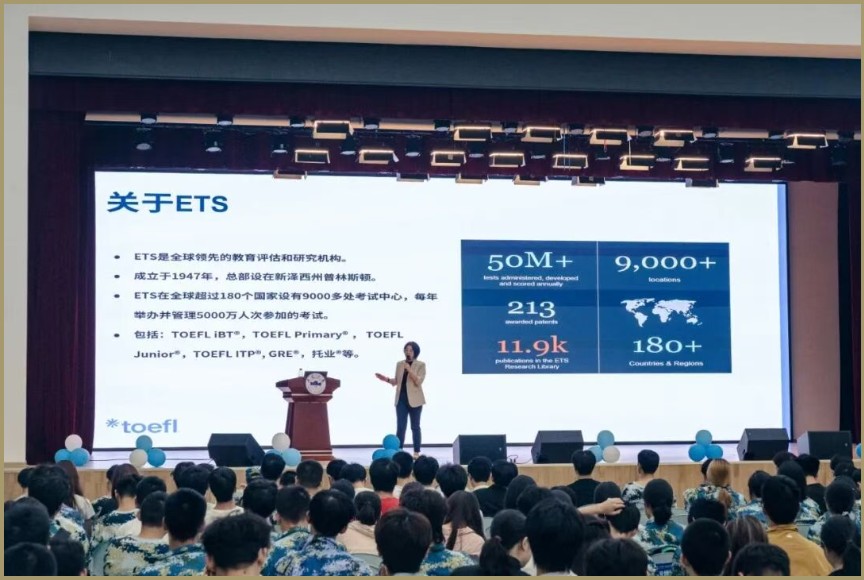
ETS 官方考试动态分享讲座现场ETS · ENGLISH · GLOBAL PATHWAYSONE TEST.
MORE
POSSIBILITIES.
DMT CLASS 01 · LATEST STORY
最新报道 / LATEST STORY

初识 ETS 明方向,逐梦寰球启新程Meet ETS, Find Your Direction: A Global Journey Begins

为帮助 2026 级新生快速了解国际化考试体系、明确学院外语培养要求并树立大学英语学习目标,学院在宛君大礼堂举办 ETS 官方考试动态分享讲座,全体大一新生到场参加。ETS 华东区市场经理围绕机构介绍、考试解读、备考方法与规划带来入门分享。To help the Class of 2026 understand international English tests and set clear learning goals, the college hosted an ETS exam update seminar at Wanjun Auditorium. An ETS East China regional manager introduced the organization, test options, preparation strategies, and planning.

讲座介绍了 ETS 的发展背景与国际影响力,并梳理托福考试体系;同时解读 2026 年托福官方动态,包括题型与考试时长变化、听说读写考察重点、评分逻辑和考场规范。面向零基础新生,主讲人还分享了大学四年英语积累节奏与入门备考建议。The session outlined ETS and the TOEFL framework, then reviewed official 2026 updates to task formats, test duration, skill areas, scoring, and test-day rules. Students also received beginner-friendly preparation advice and a longer-term plan for building English skills through college.

ETS 官方考试动态分享讲座 · 互动答疑阅读公众号原文 / Read original ↗
朋辈引路 / PEER STORIES2026.09.22

朋辈引路,“溪”启新章:2026级新生交流会举行Peer Guidance, New Beginnings: A Welcome Gathering for the Class of 2026

六位高年级同学分享学生工作与社会实践、英语学习、专业学习方法、学业与社团平衡,以及数学建模竞赛和科研入门经验。Six senior students shared advice on campus engagement, English learning, study strategies, balancing coursework with student life, and getting started in competitions and research.

阅读公众号原文 / Read original ↗

班级动态 / CLASS UPDATE2026.09.27

班级网站上线,课表与事务入口现已开放Class website is live, with timetable and class affairs now available.

欢迎使用 DMT Class 01 班级网站,查看周课表、浏览班级事务,并提交咨询或合作想法。Explore the weekly timetable, class affairs, and ways to share questions or collaboration ideas.

学习通知 / ACADEMIC NOTICE2026.09.27

2026–2027 学年第一学期课表已整理上线The Fall 2026 timetable is now available.

周课表按北京时间自动显示当前教学周,也可手动切换第 1–18 周。The timetable follows the current Beijing-time week, with manual navigation across Weeks 1–18.

班级共建 / GET INVOLVED持续更新 / ONGOING

欢迎提交活动提案与竞赛科研组队需求Share event proposals and find teammates for competitions or research.

有活动创意、竞赛信息或科研合作想法,可通过“咨询合作”页面联系班委。Use the Contact & Collaboration page to share an idea or look for collaborators.

02 / CLASS AFFAIRS

事务中心

活动、学业、资源与班级服务,从这里开始。

活动

活动日历与报名

班级活动、团建与志愿服务,查看安排并参与共创。

学业

学习互助与资料

课程答疑、学习小组、笔记和课程资料共享。

资源

灵感与作品分享

分享工具、作品、讲座和行业观察,让发现流动起来。

PAST EVENTS

活动历史 / Event History

03 / CLASS RESOURCE LIBRARY

公共资料

班级共享资料库 · Browse and download shared class materials

加载资料中…
SHARED LIBRARY

资料加载中

正在获取班级共享资料。

02 / WEEKLY TIMETABLE

周课表

2026–2027 学年第一学期 · 选择周次查看课程安排

第 3 周按北京时间自动计算当前教学周
节次星期一星期二星期三星期四星期五星期六星期日
教学周从 2026 年 9 月 7 日(周一,第 1 周)起按北京时间计算。课程周次依据课表图片整理。
课次时间依据《安徽大学教学作息时间表》(2023 年秋季学期起执行):每天 13 节,上午 8:00–12:15(第 1–5 节,第 2、3 节之间有 15 分钟大课间),下午 14:00–18:15(第 6–10 节,第 7、8 节之间有 15 分钟大课间),晚上 19:00–21:25(第 11–13 节)。
03 / RESEARCH & COMPETITIONS

竞赛与科研

发布机会、寻找队友、组建跨方向小组,把兴趣做成项目。

竞赛组队

发布组队需求

写下竞赛方向、希望的队友技能与时间安排。

科研协作

寻找科研伙伴

分享研究兴趣、实验室机会与项目协作想法。

机会日历

竞赛与讲座日历

汇总报名节点、讲座信息和项目申报机会。

竞赛选择

竞赛科研选择器

按类别、认定等级筛选国家级 A、B 类赛事与国际认定赛事,一键加入备赛清单。

04 / TEAM-UP HALL

组队大厅

发布合作需求、寻找队友,在帖子里直接交流 · Post what you need and find teammates

07 / RECOMMENDATION GUIDE

推免指南

资格自检、政策要点、四年时间轴、三条路径与竞赛科研选择 · Postgraduate recommendation guide

MODULE 01 / ELIGIBILITY CHECK

资格自检

查看周课表 →
MODULE 02 / RESUME BUILDER

自制简历

完成度 0/6
MODULE 03 / RULES

政策要点

成绩为主

综合成绩怎么算

综合成绩 = 学分加权平均成绩 + 素质评价成绩 × 0.1。素质评价加分上限 10 分,折算到综合成绩最多值 1 分——成绩排名决定资格,加分只决定资格线内的名次。

硬门槛

前 40% 与 120 学分

学分加权平均成绩须居本专业年级前 40%;前 3 学年已获学分不少于 120,且必须包含培养方案规定的前 3 学年全部必修课程;思想品德考核不合格不予推荐。

只看第一次

重修刷分救不了成绩

成绩统计前三学年所修全部课程(辅修不计),以第一次考试成绩计算,补考、重修成绩不计入,旷考记 0 分。所以每门课第一次考试就要当回事。

素质评价

四类加分只取最高一项

科研成果(论文 / 发明专利,须以安徽大学为第一署名单位)、竞赛获奖(国家级 A、B 类赛事与国际认定赛事)、创新项目(国家级大创合格结题)、社会实践(国际组织实习 3 个月以上,或志愿服务累计 100 小时以上)。同一类多项不累加,与直系亲属合作的成果不计入。

MODULE 04 / FOUR-YEAR TIMELINE

四年时间轴

MODULE 05 / THREE ROUTES

三条路径

MODULE 06 / COMPETITION PICKER

竞赛科研选择

加载中…

等级依据《安徽大学国际赛事认定项目汇总表(2023-03-15)》《安徽省大学生学科和技能竞赛 A、B 类项目列表(2019 年版)》与《全国普通高校大学生竞赛排行榜(2023 年目录)》整理;「建议年级」和「为什么值得参加」是班级整理的参考,最终加分认定以学院当年通知为准。

04 / CONTACT & COLLABORATION

咨询与合作

课程咨询、班级建议、活动提案或合作机会,欢迎告诉我们。

05 / PERSONAL ACCOUNT

个人中心

登录查看账号与角色权限 · Sign in to view your account and access

06 / EDITORIAL DESK

编辑后台

新闻、活动和课程数据 · Content tools for authorized class editors

COURSE INFORMATION

课程名称

授课教师 / Teacher
学分 / Credits
上课时间 / Time
上课地点 / Location
作业平台 / Assignments
教师与地点根据班级课表图片整理;作业平台暂待班级确认。
原型演示 · 此入口可按实际班级流程接入
08 / COURSE ESSENTIALS

Course Essentials课程要点

按课程收录的核心要点、开学准备与参考资料入口 / Key points, start-of-term preparation and references, collected course by course

MODULE HUB / 课程要点

Courses课程要点收录的课程

这是一个按课程组织的容器:进入具体课程后,可以看到该课程的课时索引、知识地图、术语核对、环境配置与考核规则。后续课程会按同样结构陆续补充到这里。

MODULE 01 / ADVANCED PROGRAMMING

Advanced Language Programming: Course Essentials高级语言程序设计课程要点

标准 C 语言课程的要点按课时收录 / Course essentials for standard C, organised lesson by lesson

LESSON INDEX / 课时索引

Lessons课时

每一课收录该次课的完整要点,结构与第一课一致:要点卡片、课程定位、知识地图、术语核对、环境配置、考核规则与学习自检。

LESSON 01 / COURSE ORIENTATION

Lesson 1: Course Orientation and C Toolchain Setup高级语言程序设计课程要点第一课

2026 年 9 月 29 日开课宣讲整理 / Based on the course orientation session of 29 September 2026

LESSON CONTENT / 本课内容

Course Orientation and C Toolchain Setup课程导论与 C 语言环境配置

2026.09.29 · CN / EN
COURSE TYPE
US-partnered course美方合作课程

教学大纲由美方提供,前两年由美方教授来华联合授课,本学年由主讲教师独立授课。Syllabus provided by the U.S. partner; previously co-taught on site, now taught independently by the lead instructor.

LANGUAGE
Chinese lectures, English materials中文讲授 · 英文材料

课堂中文讲解,课件、作业与考试题目为英文,术语以英文为准。Lectures in Chinese; slides, assignments and exam papers in English.

CONTENT
Standard C标准 C 语言

变量与类型、控制流、函数与模块化、数组与指针、结构体、输入输出与文件。Types, control flow, functions and modularity, arrays and pointers, structs, I/O and files.

ASSESSMENT
Assignments 35% · Quizzes 5%
Midterm 30% · Final 30%
作业 35% · 小测 5% · 期中 30% · 期末 30%

平时作业占比最高,缺交一次即对应零分。Assignments carry the largest single weight; a missed submission scores zero.

EXAMS
Open-book, printed material only开卷 · 仅限纸质资料

可带教材、课件与作业;手机、电脑、智能手表一律不得带入考场。Open-book with printed material only; phones, computers and smart watches are barred.

DIFFICULTY
Pointers and memory management指针与内存管理

课程公认难点,其次是递归、模块化设计与文件操作。Pointers and memory management are the recognised difficulty, followed by recursion, modular design and file handling.

Positioning and learning goals课程定位与培养目标

大学课程不是培训班。课程不追求在几周内教会某个工具的操作,而是训练可以迁移的方法:遇到没有见过的问题时,能把它拆成可计算的步骤,选择合适的表示方式,写出能被验证的程序。计算思维常被概括为抽象与自动化两个特征;写程序的核心难点是数据抽象与算法设计,而不是背诵语法。

A university course is not a short training class. The goal is transferable method: given an unfamiliar problem, break it into computable steps, choose a suitable representation, and write a program that can be verified. Computational thinking is commonly summarised as abstraction and automation, and the hard part of programming is data abstraction and algorithm design rather than memorising syntax.

程序等于算法加数据结构,这个公式出自 Niklaus Wirth(尼古拉斯·沃斯)1976 年的著作《Algorithms + Data Structures = Programs》。C 属于高级语言,但在高级语言中抽象层次较低,既能表达高层逻辑,又能直接操作内存与硬件,操作系统内核、数据库、编译器与嵌入式固件都大量使用 C。

A program equals algorithms plus data structures, the formula from Niklaus Wirth's 1976 book Algorithms + Data Structures = Programs. C is a high-level language that sits low in abstraction: it expresses high-level logic while addressing memory and hardware directly, which is why kernels, databases, compilers and embedded firmware rely on it.

Curriculum map课程知识地图

阶段主题 / Topic关键概念 / Key concepts难度
1计算基础与程序结构Computing basics源文件、预处理、编译、链接、main、printf 与 scanf低
2数据表示Data representation变量、基本数据类型、运算符与表达式、类型转换、常量低到中
3流程控制Control flow分支、循环、逻辑表达式、边界条件与循环不变式中
4函数与模块化Functions函数接口、参数传递、返回值、递归、作用域与存储期、多文件编译中到高
5复合数据与内存Memory数组、字符串、指针、动态内存分配与释放、越界与泄漏高
6输入输出与文件I/O and files格式化输入输出、缓冲区、文本与二进制文件、错误处理中
7工程化实践Engineering结构体与自定义类型、调试与测试、代码风格与可移植性中到高
后续数据结构 · 算法 · 面向对象Next courses抽象数据类型、复杂度分析,以及与本课程的函数、指针与内存模型的衔接衔接

Eight statements worth checking术语核对:容易记错的八条

常见表述 / As said核对与建议 / Check
课程叫“高级语言程序设计”,却教 C,名不副实。“高级语言”与机器语言、汇编语言相对,C 属于高级语言,只是抽象层次低、能直接访问内存,与课程名并不冲突。
算法 + 数据结构 = 程序,某位计算机科学家提出。出自 Niklaus Wirth 1976 年的著作《Algorithms + Data Structures = Programs》,他于 1984 年获图灵奖,引用时应点名。
计算思维的两大核心特征是抽象与自动化。计算思维由 Jeannette Wing 于 2006 年在《Communications of the ACM》提出;抽象与自动化是中文教材常用的概括,可作为主线但非唯一定义。
课程使用 GCC 编译器。GCC 是 GNU Compiler Collection(编译器集合),包含多种语言前端;Windows 上通过 MSYS2 安装 MinGW-w64 工具链使用。
VS Code 是集成开发环境(IDE)。VS Code 官方定位是代码编辑器,安装 C/C++ 扩展与调试器后才具备 IDE 常用的编译、调试与跳转能力。
80% 的环境配置失败都是中文用户名造成的。没有公开数据支持这个比例。可以确认的是:非 ASCII 的安装路径与用户名会让部分工具链在解析路径时出错,建议统一用英文。
程序可以没有输入,但必须有输出。更准确的说法是程序必须有可观察、可检验的结果:标准输出、返回值、写入文件或对外部状态的修改;课程作业一律要求有明确输出。
教材定价二十余元;另有说法是 89 元。两处价格互相矛盾,版本描述也不一致,以课程群最新通知为准,并在班级资料页标注确认过的版本、书号与价格。

Setting up the C toolchain on WindowsWindows 开发环境配置

目标环境是 VS Code 加 MSYS2 提供的 MinGW-w64 GCC 工具链。所有安装目录与工作目录使用英文、不含空格,这是后面每一步的前提。

The target is VS Code plus the MinGW-w64 GCC toolchain from MSYS2. Keep every install and working folder in English without spaces; this is the premise for all the steps below.

  1. 把 Windows 用户名与主目录改成纯英文(建议新建英文账户,直接改注册表容易出问题)。Make the Windows user name and home folder English (create a new account rather than editing the registry).
  2. 从 msys2.org 安装 MSYS2 到默认目录 C:\msys64,不要放在中文路径下。Install MSYS2 from msys2.org into the default C:\msys64, never a path with Chinese characters.
  3. 打开 MSYS2 UCRT64,执行 pacman -Syu;窗口要求关闭时全部关闭,重新打开后再执行一次。Open MSYS2 UCRT64 and run pacman -Syu; close everything when asked, reopen and run it again.
  4. 安装编译器:pacman -S --needed mingw-w64-ucrt-x86_64-gcc。Install the compiler with pacman -S --needed mingw-w64-ucrt-x86_64-gcc.
  5. 把 C:\msys64\ucrt64\bin 追加到用户环境变量 Path。Append C:\msys64\ucrt64\bin to the user Path variable.
  6. 新开一个终端验证:gcc --version 与 gdb --version 都能输出版本号。Open a new terminal and check that gcc --version and gdb --version both print a version.
  7. 安装 VS Code,再安装 C/C++ 扩展(ms-vscode.cpptools),可按需安装 Code Runner。Install VS Code, then the C/C++ extension (ms-vscode.cpptools) and optionally Code Runner.
  8. 新建英文工作目录,例如 D:\code\c,之后所有练习都放在这里。Create an English working folder such as D:\code\c and keep every exercise there.
  9. 编译并运行第一个程序,看到 Hello, C! 即配置成功。Build and run your first program; seeing Hello, C! means the toolchain works.
  10. 可选:在 VS Code 中生成 tasks.json 与 launch.json,按 F5 启动调试。Optional: generate tasks.json and launch.json in VS Code and debug with F5.
#include <stdio.h> int main(void) { printf("Hello, C!\n"); return 0; }
gcc hello.c -o hello.exe .\hello.exe

常见问题:'gcc' 不是内部或外部命令说明 Path 未生效,重开终端即可;编译报路径错误通常是安装或工作目录含中文;双击 exe 一闪而过请在终端运行;中文乱码请把源文件保存为 UTF-8,必要时先执行 chcp 65001。

Common problems: a missing gcc command means Path is not loaded, so reopen the terminal; path errors usually come from Chinese characters in a folder name; a flashing console just means the executable was launched by double-click; garbled Chinese usually means the source encoding does not match the console code page.

Assessment and grading考核与成绩构成

项目 / Component权重说明 / Notes
平时编程作业Programming assignments35%
不能编译的作业不得分;编译通过后按通过的测试点比例给分,评分使用未公开测试用例,只匹配样例拿不到满分。
随堂小测验In-class quizzes5%
课堂范围内的小测,用于及时反馈学习状态。
期中考试Midterm exam30%
一般安排在 11 月中下旬,开卷。无缓考与补考通道,无法参加可申请免考,成绩以期末卷面成绩核算。
期末考试Final exam30%
一般安排在次年 1 月中旬,开卷。申请缓考将取消平时与期中成绩权重,仅以卷面分核算。

作业必须在截止时间前提交,特殊情况迟交需提供医疗证明等官方材料;作业须独立完成,禁止使用 AI 生成代码、从网络复制代码、调用课程要求之外的第三方库以及与他人协同完成。以上以学院与课程最新通知为准。

Study method and start-of-term checklist学习方法与开学自检

  • 多读:读教材示例、标准库文档和同学的代码,先找输入、输出与边界条件,再猜运行结果,最后编译验证。Read more: find the inputs, outputs and edge cases first, predict the result, then compile and check.
  • 多写:从抄写到改写,再到独立实现;动手前先写伪代码,把每个循环与判断的条件写成一句话。Write more: move from copying to adapting to writing from scratch, starting from pseudocode.
  • 多上机调试:编译时打开 -Wall -Wextra,用 gdb、断点和 printf 定位问题,每次修改后重新编译运行。Debug more: compile with -Wall -Wextra and use gdb, breakpoints and printf instead of hunting errors by eye.

勾选状态保存在本机浏览器,换设备不会同步。

资料来源:2026 年 9 月 29 日“高级语言程序设计课程讲解”开课宣讲纪要,经整理、核对与扩充;价格、日期与免考缓考流程等以教师和学院最新通知为准。后续模块将补充指针与内存、调试方法、常见错误与作业范例。
Source: the course orientation session of 29 September 2026, expanded and fact-checked. Fees, dates and exemption procedures follow the latest instructor and college notice. Later modules will cover pointers and memory, debugging, common errors and worked examples.

MODULE 02 / APPLIED CALCULUS

Applied Calculus: Course Essentials应用微积分课程要点

入门微积分课程的要点按课时收录 / Course essentials for introductory calculus, organised lesson by lesson

LESSON INDEX / 课时索引

Lessons课时

每一课只收录该次课主题相关的内容:第一次课系统讲函数分类、函数变换与复合函数,本课程要点只筛选其中的极限部分,并把与极限无关的函数内容留在原课堂笔记里。

LESSON 01 / LIMITS

Lesson 1: The Idea of Limits应用微积分课程要点第一课:极限的引入与基础性质

2026 年 9 月 29 日课堂(09:51–11:25)极限部分整理与补充 / The limits material from the session of 29 September 2026, filtered and expanded

LESSON CONTENT / 本课内容

Limits: Introduction and Core Properties极限的引入与基础性质

2026.09.29 · CN / EN
COURSE
Applied Calculus应用微积分

本课属于应用微积分的极限单元,是单元的第一课,也是后续导数与积分的入口。The first lesson of the limits unit, and the doorway to derivatives and integrals.

SESSION
29 Sep 2026, 09:51-11:252026 年 9 月 29 日 第 3-5 节

原课堂同时讲了函数分类、函数变换与复合函数;本课只收录其中的极限内容。The session also covered function types, transformations and composition; this lesson keeps only the limits part.

KEY IDEA
A limit is about the trend, not the value极限看趋势,不看该点取值

当 x 充分接近 a 时 f(x) 趋近 L;函数在 a 点是否有定义、取值多少,都不影响极限。Whether f is defined at a, and what f(a) equals, has no effect on the limit.

EXISTENCE
Left and right limits must agree左右极限存在且相等

一维情形下,极限存在的充要条件是左右极限都存在且相等;阶跃函数在 0 点是反例。In one dimension the two one-sided limits must exist and be equal.

INFINITY
Infinite limits mark vertical asymptotes无穷极限对应垂直渐近线

x 趋于 a 时 |f(x)| 无限增大,则 x=a 是垂直渐近线,例如 tan x 在 x=π/2+kπ。If |f(x)| grows without bound near a, the line x=a is a vertical asymptote.

CAUTION
Oscillation and undefined points震荡与无定义点

sin(1/x) 在 x 趋于 0 时极限不存在;而 (x-1)/(x²-1) 在 x=1 无定义,极限却是 1/2。sin(1/x) has no limit at 0, while a function can have a limit where it is undefined.

Why limits come first极限为什么放在最前面

中学数学处理的是有限场景的运算,高等数学开始处理无穷,而极限正是处理无穷的核心工具。这门课的入门教材先用数值和图像建立直观,再给出严谨定义;俄罗斯教材与法国布尔巴基学派偏好直接给出抽象定义,美国教材则大量使用实例与图像。两种风格各有代价,共同点是:严谨的语言体系是学科能够持续演化的基础。

School mathematics works with finite processes; calculus begins with the infinite, and limits are the tool that makes it precise. The textbook used here builds intuition from numbers and graphs before giving the formal definition, while Russian and Bourbaki-style texts prefer abstract definitions first and U.S. texts prefer examples. Either way, a rigorous language is what lets a subject keep evolving.

教材风格 / Style引入方式 / Entry point特点 / Trade-off
本课教材 / This courseU.S.-Russian hybrid先数值与图像,再给定义Numbers and graphs first对初学者友好,直观与严谨兼顾Beginner-friendly
俄罗斯 · 布尔巴基学派Russian and Bourbaki直接给出抽象定义Abstract definition first严谨紧凑,需要较强数学基础Rigorous, demanding
美国教材U.S. textbooks大量实例与图像Examples and graphs直观易入门,严谨证明需要自己补Intuitive, proofs left to the reader

结论:先建立直观,再用严谨定义把它固定下来。十一之后的课程会给极限的 ε-δ 严格定义。

Conclusion: build intuition first, then pin it down with a formal definition. The ε-δ definition comes after the holiday.

Two problems that force the idea of a limit两个逼出极限的经典问题

课堂用两个问题引入极限,它们的共同结构都是:先算一段"平均量"的比值,再让距离或时间趋于 0。

Both motivating problems share one structure: form a ratio of average quantities, then let the distance or time interval go to zero.

问题 / Problem平均量 / Average quantity取极限 / Take the limit结果 / Result
切线斜率Slope of a tangent割线斜率 (f(x)-f(a))/(x-a)Secant slopex → a该点切线斜率Tangent slope
瞬时速度Instantaneous velocity平均速度 Δs/ΔtAverage velocityΔt → 0该时刻瞬时速度Instantaneous velocity

例 1(切线斜率):曲线 y = x² 在点 (1, 1) 处,割线斜率为 (x²-1)/(x-1)。当 x ≠ 1 时该式等于 x+1,因此 x 趋于 1 时割线斜率趋于 2,即切线斜率为 2。

lim (x → 1) (x²-1)/(x-1) = lim (x → 1) (x+1) = 2

Example 1: for y = x² at (1, 1) the secant slope is (x²-1)/(x-1), which equals x+1 for x ≠ 1, so the slope tends to 2.

例 2(瞬时速度):以多伦多 450 米高的电视塔自由落体实验为例,第 5 秒的瞬时速度无法用单点直接算出,只能取该点附近极短时间段的平均速度再取极限,最终结果为 49 m/s。

Example 2: a free-fall experiment from the 450 m tower in Toronto. The instantaneous velocity at t = 5 s cannot be read off a single point; it comes from the limit of average velocities over shrinking time intervals, and equals 49 m/s.

补充:由自由落体 s = ½gt² 得 v = gt,取 g ≈ 9.8 m/s²、t = 5 s 即 49 m/s,与课堂结果一致。

The intuitive definition朴素定义与极限到底在看什么

当自变量 x 充分接近 a(但 x ≠ a)时,函数值 f(x) 可以任意接近某个常数 L,就说 x 趋于 a 时 f(x) 的极限是 L,记作 lim (x → a) f(x) = L。这个定义只关心"趋近的趋势",不关心 a 点本身。

If f(x) can be made arbitrarily close to a constant L by taking x sufficiently close to a (but not equal to a), the limit of f at a is L, written lim (x → a) f(x) = L. Only the trend matters, not the point a itself.

f 在 a 点的情况 / At the point例子 / Example at a = 1f(a)极限 / Limit
有定义且等于极限Defined and equalf(x) = x + 122
有定义但不等于极限Defined but different同上,只把 f(1) 单独定义为 5Same, with f(1) = 552
在 a 点无定义Not definedf(x) = (x-1)/(x²-1) = 1/(x+1)for x ≠ 1无定义1/2

课堂上特别强调:多数同学已经会算这类极限,但只停留在直观层面,没有严谨的理论框架。从应用角度看,朴素认知够用;要往深处走,必须掌握严谨定义。

Most students can already compute such limits intuitively, but without a formal framework. That is enough for applications, not for going deeper.

One-sided limits and when a limit exists单侧极限与极限存在的条件

左极限指 x 从小于 a 的方向趋近 a,记 x → a⁻;右极限指 x 从大于 a 的方向趋近 a,记 x → a⁺。在一维情形下,函数在 a 点极限存在,当且仅当该点的左右极限都存在且相等。

The left limit uses x approaching a from below (x → a⁻); the right limit approaches from above (x → a⁺). In one dimension, the limit at a exists exactly when both one-sided limits exist and are equal.

情形 / Case左极限右极限结论 / Verdict
Heaviside 阶跃函数:x < 0 取 0,x > 0 取 1Step function01x = 0 处极限不存在No limit at 0
x + 1 在 a = 1Polynomial22极限存在,等于 2Limit exists
(x-1)/(x²-1) 在 a = 1Undefined at a1/21/2极限存在,等于 1/2Limit exists despite f(1) undefined

补充:阶跃函数在 0 点的取值通常约定为 1/2 或 1,但无论取多少都不影响左右极限,也不影响"极限不存在"的结论。

在二维或更高维空间,趋近某点的方向有无穷多个,"左右两侧"的判定不再适用,必须沿任意路径都趋于同一个值,极限才存在。

In two or more dimensions there are infinitely many directions of approach, so the two-sided test no longer applies; every path must lead to the same value.

When a limit does not exist极限不存在的典型情形

课堂给出的典型例子是 sin(1/x):当 x 趋于 0 时,函数值在 -1 到 1 之间无限加快地震荡,自变量的极小变化就会让函数值完成多次周期震荡,不存在统一的趋近目标,因此该点极限不存在。

The lecture's standard example is sin(1/x): as x approaches 0 the value oscillates ever faster between -1 and 1, so there is no single value being approached and the limit does not exist.

补充:证明思路是构造两条都趋于 0 的序列,看它们对应的函数值。x(n) = 1/(2nπ + π/2) → sin(1/x(n)) = 1 x(n) = 1/(2nπ) → sin(1/x(n)) = 0两条序列的函数值极限不同,所以极限不存在。这也是后续用序列刻画极限(海涅定理)的伏笔。

The usual proof takes two sequences that both tend to 0 but give different values of sin(1/x), so no limit exists.

情形 / Case例子 / Example说明 / Note
左右极限不相等One-sided limits differHeaviside 阶跃函数在 0 点Step function at 0两侧趋势不同,没有共同目标Two different trends
有界震荡Bounded oscillationsin(1/x) 在 x → 0Near zero函数值被限制在 [-1, 1] 内,但没有极限Bounded but no limit
无界震荡Unbounded oscillation(1/x) · sin(1/x) 在 x → 0Near zero既震荡又无界,也不存在极限Neither bounded nor convergent
趋于无穷大Unbounded growth1/x² 在 x → 0Near zero按实数极限定义属于不存在,写作 ∞ 只表示趋势Not a real limit, only a trend

Neighbourhoods, infinite limits and vertical asymptotes邻域、无穷极限与垂直渐近线

点 a 的 δ 邻域指以 a 为中心、δ 为半径的开区间 (a-δ, a+δ);去掉中心点 a 后就是去心邻域,写作 0 < |x - a| < δ。讨论极限时用的正是去心邻域,因为 a 点本身不参与。

The δ-neighbourhood of a is the open interval (a-δ, a+δ); removing a leaves the punctured neighbourhood 0 < |x - a| < δ, which is what limits actually use.

当 x 充分接近 a 时,如果 |f(x)| 可以大于任意给定的正数 M,就说 x 趋于 a 时 f(x) 的极限为无穷,记作 ∞ 或 -∞。要紧的是:无穷不是实数,它只是刻画函数变化趋势的符号。

If |f(x)| can exceed any given positive number M once x is close enough to a, the limit is said to be infinite, written ∞ or -∞. Infinity is not a real number; it is a symbol describing a trend.

函数 / Functionx → 0 时的行为 / Behaviour记法 / Notationx=0 是垂直渐近线?
1/x²无限增大Grows without bound+∞是 / Yes
-1/x²无限减小Decreases without bound-∞是 / Yes
1/x左右两侧分别趋于 -∞ 与 +∞Left -∞, right +∞两侧不同,不能写成 ∞是 / Yes
sin(1/x)有界震荡Bounded oscillation不存在,也不是 ∞Neither finite nor infinite否 / No

垂直渐近线的判定:若 x 趋于 a 时函数的极限为无穷,则直线 x = a 就是这条曲线的一条垂直渐近线。典型例子是正切函数,tan x 的垂直渐近线为 x = π/2 + kπ(k 为任意整数)。

Vertical asymptote test: if the limit at a is infinite, the line x = a is a vertical asymptote. The standard example is tan x, with asymptotes at x = π/2 + kπ.

Limit laws and a worked example补充:极限运算法则与例题

以下为补充内容,课堂只做直观引入;正式证明会在严谨定义之后给出。

设 lim f 与 lim g 都存在,则四则运算可以直接拆分:

lim (f ± g) = lim f ± lim g lim (f · g) = lim f · lim g lim (f / g) = lim f / lim g (要求 lim g ≠ 0)

If both limits exist, sums, products and quotients can be split term by term, provided the denominator's limit is not zero.

遇到 0/0 型未定式时,不能直接"约掉 0",要先化简:常用手段是因式分解、分子有理化、通分。例题:

lim (x → 3) (x² - 9)/(x - 3) = lim (x → 3) (x + 3) = 6

后续课程会反复使用的两个标准极限:

lim (x → 0) sin x / x = 1 lim (n → ∞) (1 + 1/n)^n = e

提醒:运算法则的前提是极限存在;0/0 只是"未定",需要继续化简,而不是无意义或等于 0。

Terminology check and study plan术语核对与预习安排

常见表述 / As said核对与建议 / Check
"Delta 邻域"写作 δ 邻域:δ 是希腊字母,表示邻域半径;去心邻域写成 0 < |x - a| < δ。Use the Greek letter δ for the radius.
极限等于无穷大,所以极限存在。An infinite limit exists.按实数极限的定义,极限为无穷属于"不存在",lim = ∞ 只是一个趋势记号。Infinite limits are not limits in the real-number sense.
函数在 a 点没有定义,所以极限不存在。Undefined at a means no limit.反例:(x-1)/(x²-1) 在 x = 1 无定义,极限却是 1/2。A function can have a limit where it is undefined.
震荡函数看一眼就知道极限不存在。Oscillation is obvious.结论对,但需要用两条序列或 ε-δ 证明,不能只凭图像。The conclusion is right, but it still needs a proof.
左右极限都存在,极限就存在。Both one-sided limits exist.还需要二者相等;Heaviside 阶跃函数就是反例。They must also be equal.
自由落体的 49 m/s 是直接测出来的。49 m/s was measured.它是由 v = gt(g ≈ 9.8 m/s²,t = 5 s)取极限得到的瞬时速度,是计算而非单点测量。It is computed as a limit, not read off a single measurement.

预习与进度:十一假期预习极限相关内容,为后续课堂做准备;十一之后的课程正式讲解极限的严谨数学定义,随后逐步推进极限计算、连续性与导数。

Over the holiday, preview the limits material. After the holiday the course gives the rigorous definition of a limit, then moves on to limit techniques, continuity and derivatives.

资料来源:2026 年 9 月 29 日「高等数学函数与极限基础讲解」课堂纪要(09:51-11:25)中与极限相关的部分,经筛选、核对与补充;标注为"补充"的小节属于课程外的整理内容,正式表述以教师讲义与后续课件为准。原课堂中的函数分类、函数变换与复合函数内容不属于极限,未收录在本课。
Source: the limits-related parts of the 29 September 2026 lecture notes, filtered, checked and expanded. Sections marked as supplements are additions outside the lecture; the instructor's materials remain authoritative.